UAE E-Invoicing: Understanding the Finalized Framework
Overview
The UAE is introducing a nationwide E-invoicing framework to modernize how businesses issue, exchange, and report invoices. Based on the PEPPOL 5-Corner Model, the system will enable businesses to exchange structured electronic invoices through Accredited Service Providers (ASPs), while invoice data is securely shared with the Federal Tax Authority (FTA). Although implementation will be phased, businesses should begin preparing now by reviewing their accounting systems, invoicing processes, and compliance readiness.
What Is UAE E-Invoicing?
The UAE E-Invoicing system is part of the country’s ongoing digital tax transformation. Its objective is to standardize how invoices are created, exchanged, and reported while improving transparency, reducing errors, and strengthening tax compliance.
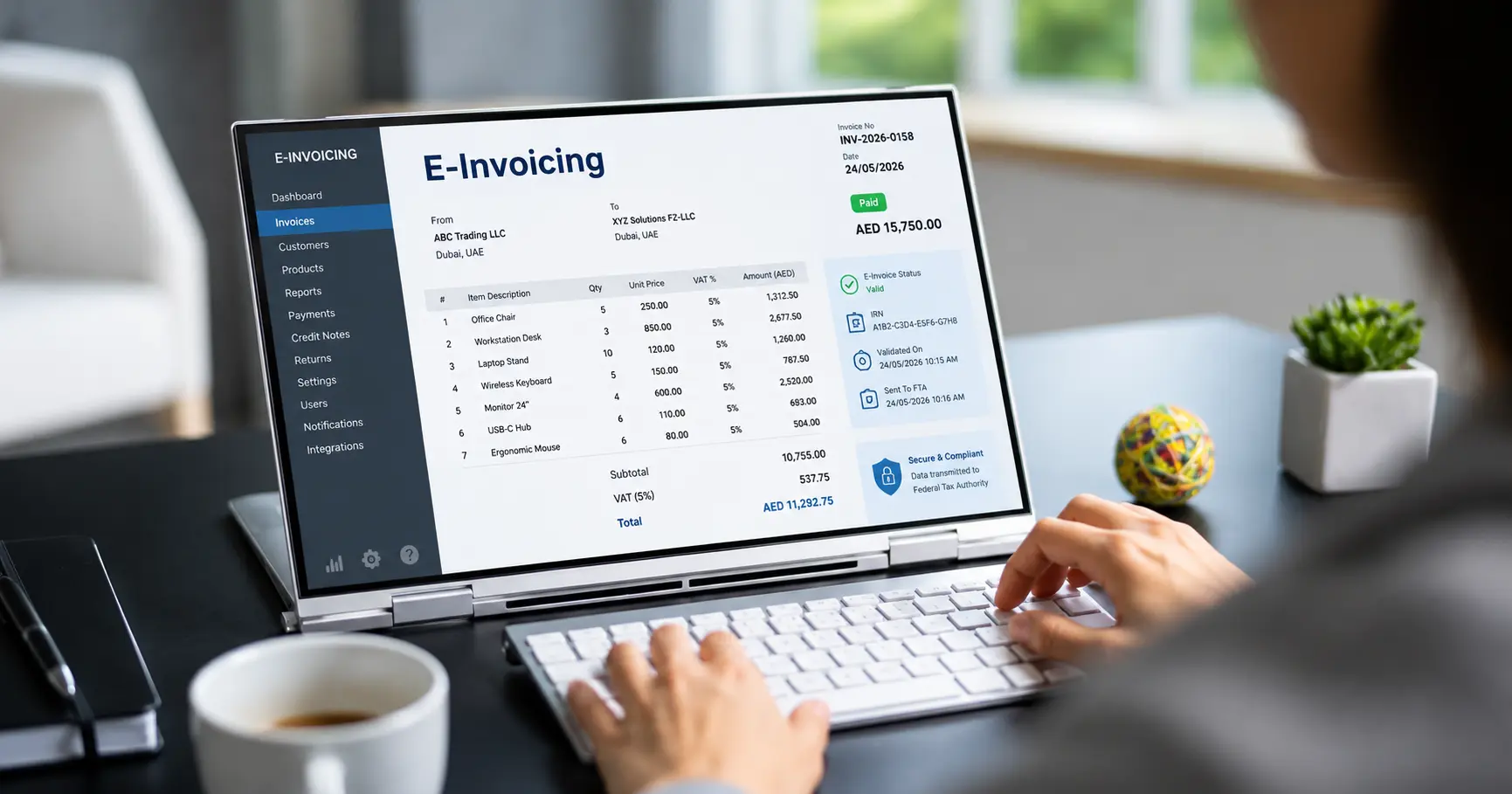
An e-invoice is not simply a PDF sent by email. Instead, it is a structured electronic document that accounting and ERP systems can process automatically. It is a structured electronic document that can be processed automatically by accounting and ERP systems. This eliminates much of the manual work involved in traditional invoicing and allows invoice data to move securely between businesses and the Federal Tax Authority (FTA).
The UAE government is introducing the framework in phases, giving businesses time to prepare before compliance becomes mandatory.
How the UAE E-Invoicing Framework Works
The UAE has adopted the internationally recognized PEPPOL 5-Corner Model, a decentralized approach that allows businesses to exchange invoices through Accredited Service Providers (ASPs) instead of a single government platform.
The process is straightforward:
- The supplier creates a structured electronic invoice using compatible accounting software.
- The supplier’s ASP validates the invoice and securely transmits it through the PEPPOL network.
- The buyer’s ASP receives and verifies the invoice before delivering it to the buyer’s accounting system.
- Accredited Service Providers electronically share relevant invoice data with the Federal Tax Authority for tax reporting and compliance.
This approach allows businesses to continue using their existing ERP or accounting systems, provided they support the required standards or can integrate with an ASP.
Business Requirements Under the UAE Framework
Businesses that fall within the phased implementation will need to ensure their invoicing systems comply with the UAE’s technical requirements.
Key preparation steps include:
- Using accounting or ERP software capable of generating structured electronic invoices.
- Connecting with an Accredited Service Provider (ASP).
- Maintaining accurate invoice records in the required digital format.
- Ensuring VAT processes align with the new reporting requirements.
- Reviewing internal invoicing workflows before mandatory implementation.
If your business still relies on manual invoicing or outdated software, you should begin assessing your systems as early as possible. This way, you’ll have enough time to upgrade before compliance becomes mandatory.
UAE E-Invoicing Implementation Timeline
The UAE has adopted a phased implementation approach to help businesses transition to the new e-invoicing framework. The rollout timeline is based on business category and revenue threshold, giving organizations sufficient time to appoint an Accredited Service Provider (ASP), upgrade their invoicing systems, and meet the mandatory compliance deadlines. The table below outlines the key implementation milestones announced under the UAE e-invoicing roadmap.
| Category | Revenue Threshold | Deadline to Appoint an Accredited Service Provider | Deadline to Implement the Electronic Invoicing System |
| Person subject to the Electronic Invoicing System | Revenue equal to or exceeding AED 50,000,000 | 30-Oct-26 | 01-Jan-27 |
| Person subject to the Electronic Invoicing System | Revenue less than AED 50,000,000 | 31-Mar-27 | 01-Jul-27 |
| Government Entity | Not applicable | 31-Mar-27 | 01-Oct-27 |
Why Preparing Early Matters
Implementing e-invoicing isn’t just about meeting a regulatory requirement. It also allows businesses to improve operational efficiency.
Structured electronic invoices reduce manual data entry and minimize invoicing errors. In addition, they speed up invoice processing and improve VAT reporting. As a result, finance teams can work more efficiently. Businesses that prepare early are less likely to face last-minute compliance issues or operational disruptions when the framework becomes mandatory.
How Vision Taxation Can Help
Preparing for e-invoicing involves more than updating your accounting software. In addition, businesses should review their tax processes, internal controls, and compliance obligations before implementation begins. Businesses also need to review their tax processes, system readiness, and compliance obligations. Vision Taxation helps businesses understand the UAE e-invoicing framework, assess existing invoicing systems, identify compliance gaps, and prepare for implementation. Whether you need VAT advisory, Corporate Tax support, or guidance on e-invoicing readiness, our team can help you navigate the transition with confidence.
Frequently Asked Questions
Is e-invoicing mandatory in the UAE?
The UAE is introducing e-invoicing in phases. Businesses covered under the implementation roadmap will be required to comply according to the timelines announced by the authorities.
What is the difference between an e-invoice and a PDF invoice?
A PDF invoice is simply a digital copy of a document. An e-invoice is a structured electronic file that accounting systems can automatically read, validate, and process.
What is an Accredited Service Provider (ASP)?
An ASP is an approved provider that validates and securely exchanges electronic invoices between businesses while supporting compliance with the UAE e-invoicing framework.
Will I need to replace my accounting software?
Not necessarily. Many businesses can continue using their existing accounting or ERP systems if they support the required standards or can integrate with an Accredited Service Provider.
When should businesses start preparing?
Businesses should begin reviewing their invoicing systems, accounting software, and internal processes now. Early preparation makes implementation smoother and reduces the risk of compliance issues once the framework becomes mandatory.