

TLDR
- The UAE has implemented the Peppol Continuous Transaction Control (CTC) model, and this has been adopted as the basis for its e-invoicing system.
- This framework allows businesses to “trade” invoices electronically with Accredited Service Providers (ASPs).
- The tax data are reported to the Federal Tax Authority (FTA) in real-time or near real-time.
- The UAE has adopted a decentralized model, Decentralized Continuous Transaction Control and Exchange (DCTCE).
- Businesses will require compliant accounting systems, XML invoices, and integration with an ASP.
What is Peppol CTC Model in UAE?
The UAE has chosen the Peppol CTC model as the basis for the country’s national e-invoicing system. It provides the rules for creation, exchange, validation, and reporting of invoices between suppliers, buyers, Accredited Service Providers (ASPs), and the Federal Tax Authority (FTA).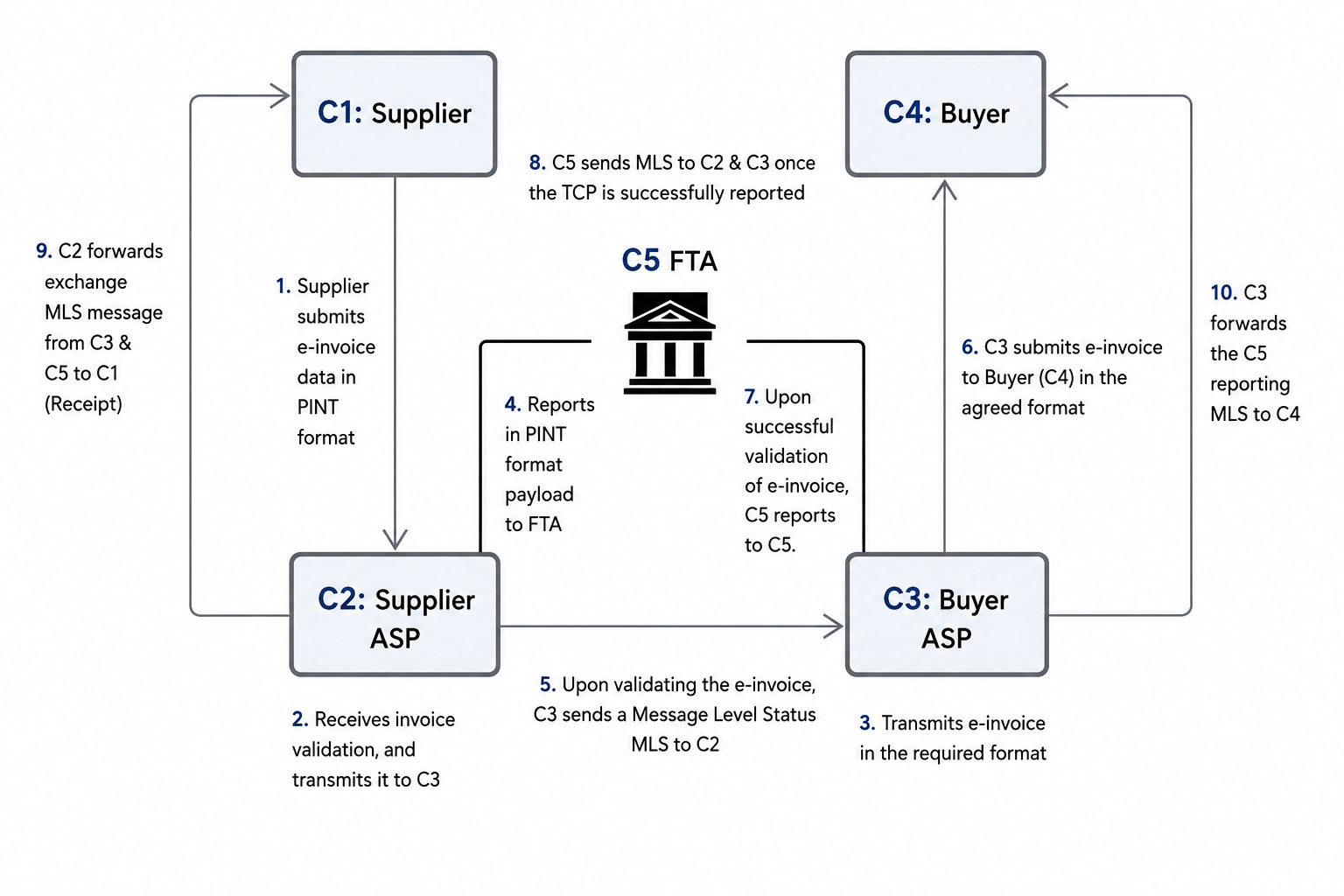
The UAE has its own version called Decentralized Continuous Transaction Control and Exchange (DCTCE), a Peppol-based system that enables secure invoice exchange and near real-time tax reporting.
To understand how the Peppol CTC model fits into the country’s broader digital tax ecosystem, you can also read our guide on UAE e-invoicing and the finalized framework.
What Are Peppol, CTC and DCTCE?
Peppol
Peppol is an international network for standardising the exchange of electronic documents such as invoices and purchase orders between businesses and accounting systems. It enables cross-border transactions using the “Connect Once, Connect All” approach.
Continuous Transaction Controls (CTC)
The CTC is a tax compliance regime designed to provide invoice information to tax authorities in real time or near real time rather than waiting for periodic tax filings.
Decentralized Continuous Transaction Control and Exchange
DCTCE is the UAE’s version of the Peppol CTC model. It enables accredited providers to exchange invoices and report tax information to the FTA at the same time.
Why did the UAE select the Peppol CTC Model?
UAE embraces the Peppol CTC framework to revamp tax administration and spur the digital economy.
Major advantages are:
- Transparency: Real-time reporting increases the transparency of taxes and reduces tax evasion.
- Automation: automates to a large extent invoice processing and reporting.
- Efficiency: Companies save time and money on the invoice process.
- Effectiveness: Audit trails are more reliable and accurate.
- Compliance: The framework helps to close the tax gap.
- Cross-border interoperability: Businesses can send and receive invoices with overseas trading partners.
How does the Peppol CTC model function
The invoice process contains several steps:
- The vendor issues an invoice in its accounting or ERP system.
- The invoice is sent to the supplier’s ASP.
- The ASP validates the invoice and, if necessary, converts it into the required XML format.
- The invoice is transmitted via the Peppol network to the buyer’s ASP.
- The relevant tax data is reported to the Federal Tax Administration (FTA).
- The buyer gets the invoice validated.
- A message is generated confirming or rejecting.
This process ensures the effective exchange and reporting of invoices in line with UAE regulations.
UAE Five Corner System vs Peppol CTC Model
Although the terms are often used interchangeably, they are different.
The Peppol CTC model is the overall framework that defines how invoices are exchanged and how tax reporting works. The five-corner model is the technical architecture used to implement that framework.
In simple terms:
- The Peppol CTC: Rules and structure.
- Five-corner model: The technical architecture linking suppliers, buyers, ASPs and the FTA.
What Role Do ASPs (Accredited Service Providers) Play?
ASP’s are at the heart of the UAE’s e-invoicing system. They are the middlemen between businesses and the FTA.
Their business:
- Check invoice data.
- Connecting businesses to the Peppol network.
- Secure trade bills.
- Reporting tax information to FTA.
- Participant IDs provided.
- Technical standards compliance.
Without an ASP, businesses can’t be part of the Peppol ecosystem in full.
XML, PINT AE, Mandatory Fields Explained
The UAE e-invoicing system has the following technical elements:
- XML: The format in which invoices are formatted so that they can be read by machines.
- PINT AE: UAE’s custom Peppol spec.
- Required invoice information: Mandatory fields, including tax details and identification numbers.
These elements allow to automatically validate, processing, and reporting invoices to the authorities.
Is Peppol mandatory in the UAE?
Yes. E-invoicing will be phased in across the UAE, and businesses that fall under the rules will need to comply. Invoicing companies must issue each other invoices in the required format, via an accredited provider.
How Can Companies Prepare?
Businesses can begin to prepare by:
- Determining if they’re regulated.
- Choosing an Accredited Service Provider.
- Upgrading their accounting or ERP software.
- Integrating into the Peppol network.
- Testing invoice flows before implementation.
Frequently Asked Questions
What is the CTC model of e-invoicing?
It is a framework that enables invoice data to be validated and reported to tax authorities in real time or near real time.
What is Peppol in the UAE?
Peppol is an infrastructure that enables companies to send and receive electronic invoices (e-invoices) to and from each other and from government systems in a standardised manner.
What is Peppol?
It uses a secure network where businesses can automatically exchange invoices through accredited providers.
How do I obtain a participant ID?
After registration and onboarding, businesses are assigned a participant ID from their ASP.
Conclusion
The UAE’s forthcoming e-invoicing system will follow the Peppol CTC model. The framework integrates standard invoice exchange, automated tax reporting, and secure data transfer.
With the country moving towards mandatory e-invoicing, having some early preparation in place will help companies be better placed to ensure compliance and streamline financial operations.
As a trusted tax advisory and e-invoicing consultant in the UAE, Vision Taxation helps businesses transition to the Peppol CTC framework with support for compliance readiness, implementation planning, accounting system alignment, and regulatory requirements. From understanding the UAE e-invoicing framework to preparing your business for mandatory compliance, Vision Taxation offers tailored solutions for businesses across the UAE.